Trapezius Stretching Exercises: A Comprehensive Guide
Targeted stretching exercises effectively prevent and manage trapezius pain‚ releasing trigger points radiating discomfort into the head‚ jaw‚ neck‚ shoulder‚ and back areas.
Understanding the Trapezius Muscle
The trapezius muscle‚ a large‚ triangular-shaped muscle extending from the base of the skull down to the mid-back and shoulders‚ plays a crucial role in supporting and moving the neck‚ shoulders‚ and upper back. Often‚ this muscle develops painful knots‚ known as trigger points‚ which can radiate pain to various areas including the head‚ jaw‚ neck‚ shoulder‚ and back.
Understanding its function is key to addressing tension. The trapezius assists in scapular movement – elevation‚ depression‚ retraction‚ and rotation – and contributes to neck extension and lateral flexion. Because of its broad attachment and involvement in numerous movements‚ it’s particularly susceptible to strain and tension from poor posture‚ stress‚ and repetitive activities. Targeted stretching and trigger point release are vital for relief.
Anatomy and Function of the Trapezius
The trapezius is divided into three sections: upper‚ middle‚ and lower‚ each with distinct functions. The upper trapezius elevates and retracts the scapula‚ and extends the neck. The middle trapezius retracts the scapula‚ while the lower trapezius depresses and rotates the scapula upward.
These sections work synergistically to control scapular movement‚ contributing to proper shoulder function and posture. Its origin spans from the occipital bone and ligamentum nuchae to the spinous processes of the cervical and thoracic vertebrae‚ inserting onto the scapular spine and clavicle. This extensive anatomy explains why tension can manifest in diverse pain patterns. Maintaining flexibility through stretching supports optimal function and prevents discomfort.
Common Causes of Trapezius Tension & Pain
Trapezius pain arises from numerous factors‚ often linked to postural imbalances and stress. Prolonged periods of poor posture – like slouching over desks or devices – are significant contributors. Stress frequently manifests as muscle tension‚ particularly in the upper trapezius‚ leading to knots or trigger points.
Repetitive movements‚ such as those in certain occupations or sports‚ can also overload the muscle. Injuries like whiplash or direct trauma to the shoulder area can directly cause trapezius strain; Dehydration and nutrient deficiencies may also play a role. Addressing these underlying causes‚ alongside targeted stretching‚ is crucial for effective pain management and prevention.
Stretching Exercises for the Trapezius
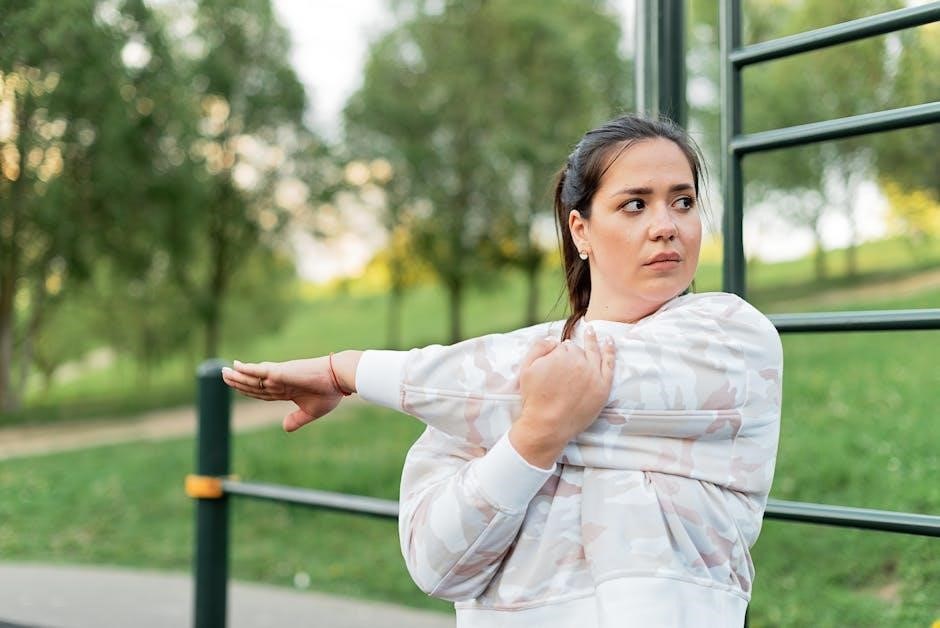
Effective stretches target the upper and lower trapezius‚ levator scapulae‚ and neck muscles‚ relieving tension and restoring flexibility for optimal shoulder function.
Upper Trapezius Stretch – Seated Variation
To perform this stretch‚ begin by sitting comfortably with good posture. Place the hand of the side you wish to stretch beneath your seat. Gently tilt your ear towards the opposite shoulder‚ feeling a stretch along the side of your neck and upper trapezius.
Enhance the stretch by lightly using your opposite hand to guide your head further‚ but avoid forcing the movement. Maintain a relaxed shoulder position‚ preventing any shrugging. Hold this position for approximately 20-30 seconds‚ breathing deeply and evenly.
Repeat this stretch 2-3 times on each side‚ ensuring a comfortable yet noticeable stretch. This seated variation is ideal for individuals seeking a controlled and accessible way to release tension in the upper trapezius muscle‚ alleviating neck and shoulder discomfort.
Upper Trapezius Stretch – Hand Behind Back
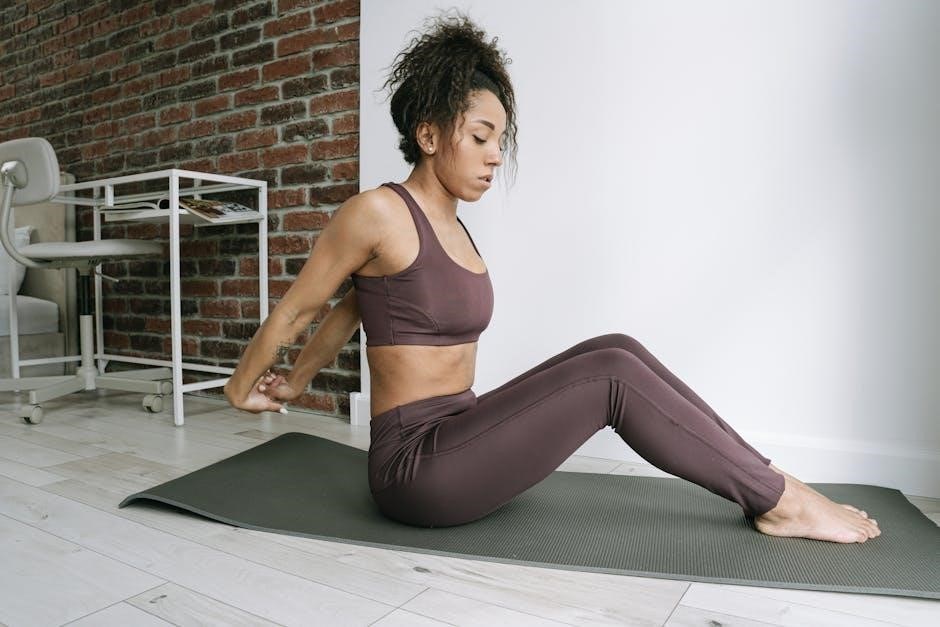
This stretch targets the upper trapezius by creating a gentle‚ angled pull. Start in a seated position with your posture upright. Reach one hand behind your back‚ and gently pull your head forward and towards the opposite side‚ creating an angle. You should feel a stretch extending from the base of your skull down into your shoulder blade.
Use the hand on the opposite side to lightly guide the stretch‚ avoiding any forceful movements. Ensure your shoulder remains relaxed throughout the exercise. Hold the stretch for 20-30 seconds‚ focusing on deep‚ controlled breathing.
Repeat this stretch 2-3 times on each side. This variation is effective for releasing tension and improving flexibility in the upper trapezius region‚ offering relief from neck and shoulder pain.
Levator Scapulae Stretch
The levator scapulae muscle often contributes to upper back and neck tension. To stretch it‚ begin seated. Place the hand of the side you intend to stretch beneath your seat for stabilization. Gently drop your chin towards your chest and simultaneously rotate your head towards the armpit of the same side.
To deepen the stretch‚ use your opposite hand to gently pull your head further into the rotation‚ but avoid forcing the movement. You should feel a stretch along the side and back of your neck‚ and potentially into your shoulder blade.
Hold this position for 20-30 seconds‚ breathing deeply. Repeat 2-3 times on each side to alleviate tension and improve range of motion.
Combined Upper Trapezius and Levator Scapulae Stretch
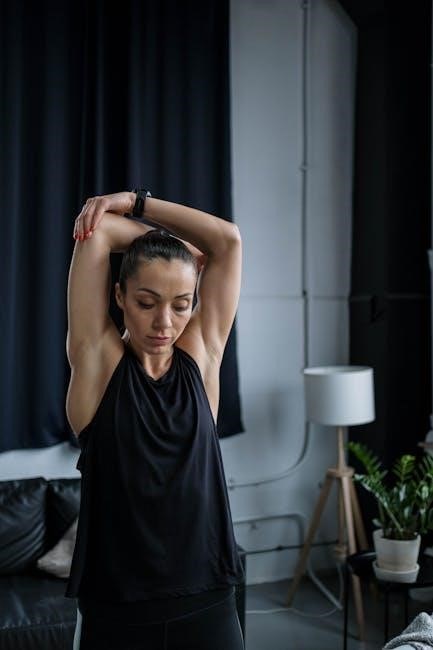
This stretch targets both the upper trapezius and levator scapulae muscles simultaneously‚ providing comprehensive relief for neck and shoulder tension. Begin in a seated position. Sit on the hand of the side you wish to stretch. Gently drop your chin towards your chest and turn your head to look towards that hand.
Wrap your other hand over the top of your head‚ applying gentle pressure to increase the stretch. Ensure the movement is controlled and doesn’t cause pain. You should feel a stretch from the base of your skull‚ down the side of your neck‚ and into your shoulder blade.
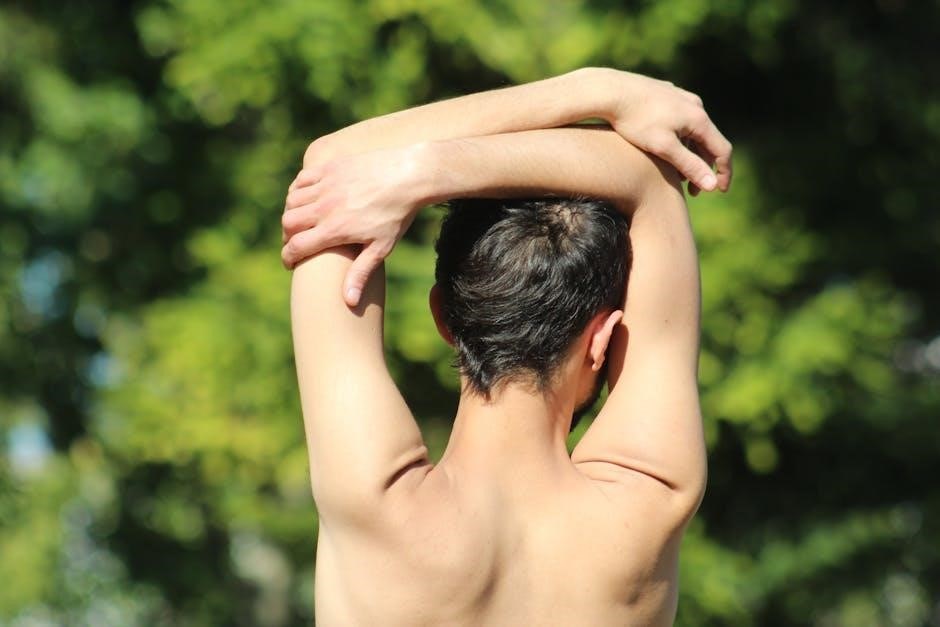
Hold for 20-30 seconds‚ repeating 2-3 times per side‚ focusing on deep‚ relaxed breathing.
Lower Trapezius Focused Stretches
Mobilization techniques‚ like straightening elbows and pulling hands down‚ alongside scapular retraction and depression‚ effectively target and strengthen the lower trapezius muscles.
Lower Trapezius Mobilization – Elbow Straightening
This stretch specifically targets the lower trapezius‚ aiding in scapular stability and posture correction. Begin by standing or sitting with good posture‚ ensuring your shoulders are relaxed. Extend your arms straight out in front of you‚ keeping a slight bend in your elbows initially.
Slowly straighten your elbows‚ simultaneously pulling your hands downwards along your sides. Focus on squeezing your shoulder blades together and slightly depressing them – think of sliding them down your back.
Hold this position for a few seconds‚ pausing and breathing slowly and deeply. You should feel a gentle stretch across your lower trapezius muscles. Repeat this movement 2-3 times‚ concentrating on controlled movements and maintaining proper form. This exercise helps improve lower trapezius activation and reduce upper trapezius dominance.
Scapular Retraction and Depression Stretch
This stretch focuses on strengthening and lengthening the muscles responsible for controlling scapular movement‚ crucial for healthy shoulder function and posture. Begin by sitting or standing tall with relaxed shoulders. Imagine squeezing a pencil between your shoulder blades – this initiates scapular retraction.
Simultaneously‚ gently depress your shoulder blades‚ drawing them downwards away from your ears; Avoid shrugging or lifting your shoulders during this movement. Hold this retracted and depressed position‚ feeling a stretch across your upper back and between your shoulder blades.
Rotate your palms outward while maintaining the squeeze. Hold for several seconds‚ breathing deeply. Repeat this exercise several times‚ focusing on controlled movements and engaging the correct muscles. This stretch counteracts rounded shoulders and improves upper back posture.
Neck Stretches Targeting Trapezius Involvement
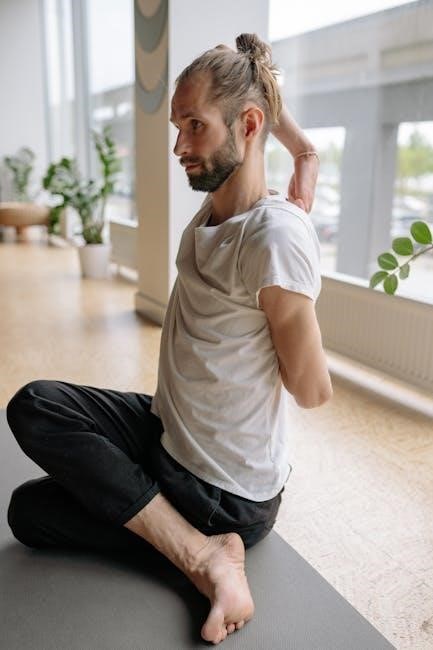
Gentle neck stretches‚ like tilting your ear towards your hand‚ relieve trapezius tension and improve cervical spine flexibility‚ easing discomfort effectively.
Head and Scapular Retraction Exercise
This exercise beautifully combines neck and upper back engagement for comprehensive trapezius relief. Begin by gently pulling your chin straight back‚ avoiding any downward tucking motion – imagine creating a double chin. Simultaneously‚ squeeze your shoulder blades down and together‚ focusing on a controlled‚ deliberate movement.
As you hold this retracted position‚ rotate your palms outward. This subtle action further enhances the stretch across the upper trapezius and rhomboid muscles. Maintain this posture for several seconds‚ breathing deeply and evenly throughout.
Repeat this sequence multiple times‚ concentrating on feeling the muscles engage and release. This exercise is excellent for counteracting the effects of prolonged sitting and forward head posture‚ promoting better alignment and reducing tension in the neck and shoulders.
Cervical Spine Flexibility – Upper Trapezius Stretch
This stretch focuses on increasing range of motion in your cervical spine while specifically targeting the upper trapezius. Gently grasp the right side of your head with your right hand. Slowly tilt your ear towards your shoulder‚ feeling a comfortable stretch along the side of your neck. Avoid lifting your shoulder up to meet your ear; maintain a relaxed shoulder position.
Hold this stretch for approximately 20 seconds‚ breathing deeply and allowing the muscle to release. Repeat this movement on each side three times‚ performing the exercise side to side. Remember to keep the motion small and controlled‚ avoiding any forceful or jerky movements.
This stretch is beneficial for relieving tension headaches and improving overall neck flexibility‚ contributing to a healthier and more comfortable posture.
Daily Cervical Stabilization Exercises – Neck Stretches
Consistent neck stretches are crucial for maintaining cervical stability and preventing trapezius-related discomfort. A simple yet effective exercise involves gently tilting your ear away from your hand while seated‚ ensuring a comfortable stretch in your neck. Avoid complete head rotation‚ focusing instead on small‚ controlled movements from side to side.
Hold each stretch for around 20 seconds‚ repeating the process three times on each side. This routine enhances flexibility and reduces muscle tension. Incorporating these stretches daily can significantly improve posture and alleviate pain.
Remember to breathe deeply throughout each stretch‚ promoting relaxation and maximizing the benefits for your neck and upper back muscles.
Advanced Trapezius Stretching Techniques
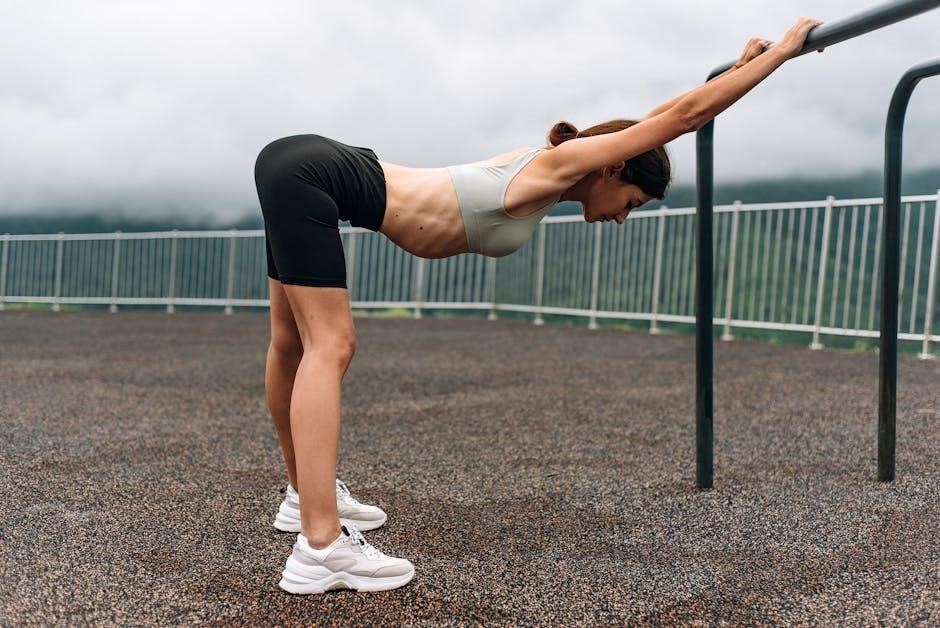
Explore static and dynamic stretching‚ alongside Proprioceptive Neuromuscular Facilitation (PNF) techniques‚ to maximize flexibility and address deeper muscle imbalances effectively.
Static vs. Dynamic Trapezius Stretching
Static stretching involves holding a stretch in a challenging but comfortable position for a period‚ typically 20-30 seconds; This method is excellent for improving overall flexibility and is best utilized after a warm-up or workout when muscles are already pliable. For the trapezius‚ examples include the seated upper trapezius stretch or hand-behind-back variations.
Dynamic stretching‚ conversely‚ incorporates controlled movements through a full range of motion. This prepares the muscles for activity by increasing blood flow and enhancing neuromuscular activation. Think of gentle neck rotations‚ scapular protractions and retractions‚ or arm circles. Dynamic stretches are ideal as part of a warm-up routine before engaging in trapezius-focused exercises.
Choosing between static and dynamic stretching depends on your goals. For immediate performance enhancement‚ dynamic stretching is preferred. For long-term flexibility gains and cool-down‚ static stretching is more beneficial.
Proprioceptive Neuromuscular Facilitation (PNF) Stretching
Proprioceptive Neuromuscular Facilitation (PNF) stretching is an advanced technique that leverages the body’s natural reflexes to achieve greater flexibility. It typically involves a partner‚ though self-PNF can be adapted with resistance bands. A common PNF method is the “hold-relax” technique.
For the trapezius‚ this involves gently stretching the muscle to its limit‚ then isometrically contracting it against resistance (provided by a partner or band) for several seconds. Following the contraction‚ the muscle is relaxed‚ and a deeper stretch is applied. This process exploits the autogenic and reciprocal inhibition reflexes‚ allowing for increased range of motion.
PNF stretching is highly effective but requires careful execution to avoid injury. It’s recommended to learn proper technique from a qualified professional before attempting it independently. It’s best suited for individuals with a good baseline level of flexibility.
Integrating Stretching into a Routine
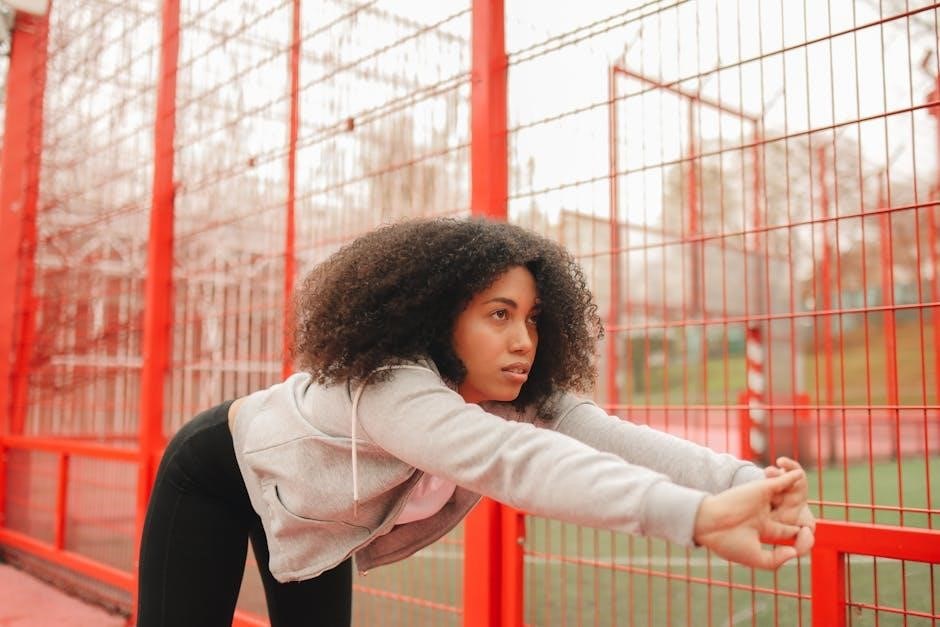
Incorporate warm-up exercises before stretching‚ followed by cool-down routines afterward‚ performing sessions frequently with appropriate duration for optimal trapezius muscle health.
Warm-up Exercises Before Trapezius Stretching
Preparing the trapezius muscle for stretching is crucial to prevent injury and maximize effectiveness. Begin with gentle neck rotations – slowly turning your head from side to side‚ and then tilting your ear towards each shoulder. Perform these movements with control‚ avoiding any sharp or jerky motions.
Next‚ incorporate shoulder rolls‚ both forward and backward‚ to increase blood flow and loosen the surrounding muscles. Arm circles‚ small and gradually increasing in size‚ are also beneficial. A light cardio activity‚ like marching in place or arm swings‚ can further elevate your heart rate and prepare your muscles for deeper stretching.
These warm-up exercises enhance muscle elasticity and reduce the risk of strain during the stretching routine‚ ensuring a safer and more productive session for relieving trapezius tension.
Cool-down Exercises After Trapezius Stretching
Following trapezius stretches‚ a cool-down period is essential for gradually returning muscles to their resting state. Begin with slow‚ controlled neck rotations‚ mirroring the warm-up but at a reduced pace. Gentle shoulder shrugs‚ both upwards and downwards‚ help release any remaining tension.
Arm swings‚ performed slowly and deliberately‚ can further promote relaxation. Deep breathing exercises are incredibly beneficial‚ encouraging oxygen flow and reducing muscle soreness. Holding each stretch for a shorter duration – around 15 seconds – allows for a gentle release without overexertion.
This cool-down phase aids in preventing muscle stiffness and promotes recovery‚ maximizing the benefits of your trapezius stretching routine and minimizing post-exercise discomfort.
Frequency and Duration of Stretching Sessions
For optimal results‚ incorporate trapezius stretches into your routine 2-3 times per week. Consistency is key to improving flexibility and reducing tension. Each stretching session should ideally last between 10-15 minutes‚ allowing sufficient time to target all areas of the trapezius muscle.
Hold each stretch for 20-30 seconds‚ focusing on deep‚ controlled breathing. Avoid bouncing or forcing the stretch‚ as this can lead to injury. Listen to your body and stop if you experience any pain.
Short‚ frequent stretching breaks throughout the day can also be beneficial‚ especially if you spend prolonged periods sitting or performing repetitive movements. Adjust the frequency and duration based on your individual needs and pain levels.
Addressing Trigger Points in the Trapezius
Self-massage and tools like foam rollers or massage balls effectively release trapezius trigger points‚ alleviating pain radiating into the head‚ neck‚ and shoulders.
Self-Massage Techniques for Trapezius Trigger Points
Locating trigger points within the trapezius muscle is the first step; they often feel like tender knots. Use your fingertips or the heel of your hand to apply firm‚ circular pressure to these areas. Begin with gentle pressure‚ gradually increasing it as tolerated. Focus on the upper‚ middle‚ and lower portions of the trapezius‚ as trigger points can develop in any region.
Massage slowly and deliberately‚ holding pressure on each point for 30-60 seconds. You may experience referred pain – discomfort in areas beyond the immediate site – which indicates you’ve found a trigger point. Continue massaging until the tenderness subsides. Remember to breathe deeply throughout the process to promote relaxation and muscle release. Consistent self-massage can significantly reduce trapezius tension and pain.
Tools for Trigger Point Release (Foam Rollers‚ Massage Balls)
Foam rollers are excellent for broader trapezius muscle release. Lie with the roller positioned under your upper back‚ supporting your head. Gently roll up and down‚ pausing on tender spots for 30-60 seconds. Massage balls‚ like lacrosse or tennis balls‚ offer more targeted pressure. Place the ball between your trapezius and shoulder blade‚ or against a wall‚ and lean into it.
Slow‚ controlled movements are key with both tools. Avoid rolling directly over your spine. These tools help break up adhesions and increase blood flow‚ easing muscle tension. Experiment with different pressures and angles to find what works best for you. Combining these tools with self-massage techniques enhances trigger point release and promotes overall muscle recovery.
Precautions and Considerations
Avoid stretching if experiencing acute injury or severe pain. Modify exercises based on fitness level‚ and always listen to your body’s signals carefully.
When to Avoid Trapezius Stretching
It’s crucial to exercise caution and avoid trapezius stretching under certain circumstances to prevent further injury or exacerbate existing conditions. Do not stretch if you are experiencing an acute muscle strain‚ tear‚ or inflammation in the trapezius region. Stretching during the acute phase can worsen the damage and prolong recovery time.
Individuals with severe pain‚ particularly if accompanied by numbness‚ tingling‚ or weakness in the arm or hand‚ should refrain from stretching and consult a healthcare professional. Avoid stretching if you have a recent fracture‚ dislocation‚ or other significant injury to the neck‚ shoulder‚ or upper back.
Furthermore‚ if you have certain medical conditions‚ such as nerve compression‚ cervical disc herniation‚ or active rheumatoid arthritis‚ stretching may be contraindicated. Always seek guidance from a qualified healthcare provider before starting any new stretching program‚ especially if you have underlying health concerns.
Modifications for Different Fitness Levels
Trapezius stretches can be adapted to suit varying fitness levels and flexibility. Beginners should start with gentle‚ less intense stretches‚ focusing on proper form over depth. Reduce the range of motion and hold stretches for shorter durations – around 15-20 seconds – initially. Utilize seated variations for better stability and control.
Intermediate individuals can gradually increase the intensity and duration of stretches‚ holding them for 30 seconds. Incorporate dynamic stretches‚ like controlled neck rotations and scapular movements‚ into their warm-up routine. Explore variations with slight resistance‚ using a towel or strap.
Advanced individuals can explore more challenging stretches‚ such as PNF stretching‚ and incorporate stretches into a comprehensive mobility routine. They can also utilize tools like foam rollers for deeper tissue release. Remember to listen to your body and avoid pushing beyond your comfortable range of motion.